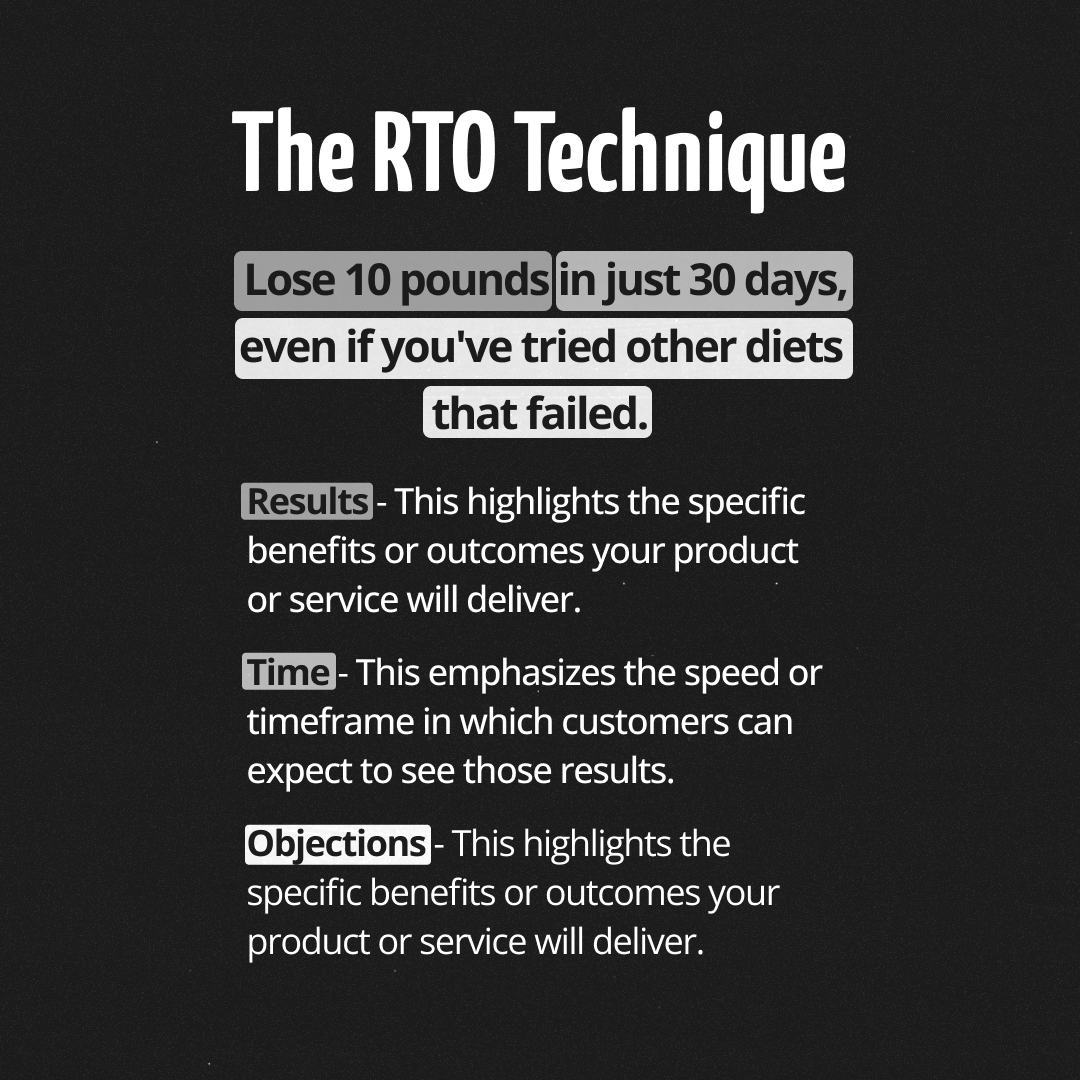
Marketing messages live or die based on their ability to persuade prospects to take action. Among the countless frameworks and formulas available to sales and marketing professionals, the RTO technique stands out for its simplicity and effectiveness. This approach structures messaging around three critical elements that address prospect psychology directly: Results, Time, and Objections.
Understanding and applying the RTO technique transforms generic marketing claims into compelling value propositions. For professionals focused on lead generation and conversion optimization, mastering this framework provides a practical tool for crafting messages that resonate with prospects and drive measurable outcomes.
Understanding the RTO Framework
The RTO technique recognizes that prospects evaluate solutions through a specific mental filter. They want to know what results they will achieve, how quickly those results will materialize, and why this solution will work when others have failed. Addressing all three elements in your messaging dramatically increases persuasiveness.
Results: The Outcome Promise
The first element of the RTO framework focuses on specific, tangible results your solution delivers. Generic promises like "improve your business" or "increase efficiency" fail to capture attention because they lack specificity. Effective results statements paint a clear picture of the exact outcome prospects can expect.
Consider the difference between these approaches. A vague results statement might claim: "Our lead generation platform helps you find more customers." A specific results statement declares: "Generate 50 qualified sales appointments per month with decision makers in your target accounts."
The specific version works better because prospects can immediately visualize the outcome and assess whether it solves their problem. Fifty qualified appointments per month is concrete, measurable, and meaningful. It allows prospects to calculate potential revenue impact and compare against their current results.
Time: The Speed Component
Results matter, but timeframe transforms how prospects evaluate those results. The same outcome achieved in 30 days feels dramatically different than the same outcome achieved in 12 months. The time element addresses the natural question every prospect asks: "How long until I see results?"
Including specific timeframes serves multiple purposes. It sets realistic expectations, preventing disappointment from unrealistic assumptions. It creates urgency by emphasizing that results come quickly rather than requiring endless patience. It differentiates your solution from alternatives that might deliver similar results over longer periods.
For B2B lead generation, time specifications might reference how quickly prospects can expect to see qualified leads, how long implementation takes before value begins, or how rapidly ROI typically materializes. These timeframes should be honest and achievable, as overpromising on speed damages credibility when reality fails to match claims.
Objections: Overcoming Skepticism
The third element acknowledges that prospects bring skepticism and past disappointments to every new solution they consider. They have tried other approaches that failed. They have heard promises that proved empty. This accumulated skepticism creates resistance that marketing messages must address directly.
Effective objection handling does not ignore past failures but acknowledges them explicitly. Phrases like "even if you've tried other approaches that failed" or "regardless of previous disappointments" validate prospect experience while positioning your solution as different.
This element works because it demonstrates understanding. Prospects feel heard when messaging acknowledges their skepticism rather than ignoring it. The acknowledgment also creates an opening to explain specifically why your approach succeeds where others fell short.
Applying RTO to Lead Generation Messaging
The RTO framework applies across all marketing contexts, but its power becomes especially clear in lead generation scenarios where prospect attention is scarce and competition is fierce.
Landing Page Headlines
Landing pages serve as critical conversion points where prospects decide whether to engage further or leave. RTO-structured headlines immediately communicate value in a format that addresses prospect psychology.
Weak landing page headline: "The Best Lead Generation Platform"
Strong RTO headline: "Generate 200 Qualified B2B Leads Per Month Within 60 Days, Even If Your Current Approach Delivers Inconsistent Results"
The strong version specifies exact results (200 qualified leads per month), includes timeframe (within 60 days), and addresses the objection (inconsistent current results). Prospects reading this headline immediately understand what is being offered, how quickly they will see results, and that the solution accounts for common challenges.
Email Subject Lines and Preview Text
Email marketing faces perhaps the toughest attention competition of any channel. Prospects scan subject lines in seconds, deciding whether messages deserve attention. RTO elements make subject lines more compelling by packing maximum relevant information into minimal space.
Generic subject line: "Improve Your Sales Results"
RTO subject line: "Add 15 Sales Appointments This Month Despite Tight Budgets"
The RTO version specifies the result (15 appointments), implies timeframe (this month), and addresses a common objection (budget constraints). This specificity helps prospects immediately assess relevance rather than requiring them to open the email to understand the offer.
Sales Outreach Messages
Sales professionals conducting direct outreach to prospects benefit enormously from RTO structuring. Cold outreach already faces skepticism. Messages that quickly establish credibility by demonstrating understanding earn better response rates.
An RTO-structured outreach message might read: "I work with marketing directors who need to generate 50 qualified enterprise leads per quarter without expanding their team. Most achieve this within 90 days even after previous lead generation vendors underdelivered. Would a brief conversation about your current lead generation challenges make sense?"
This approach accomplishes several goals simultaneously. It specifies the exact result, includes timeframe, acknowledges common objections, and invites conversation rather than demanding commitment.
Crafting Effective RTO Statements
Creating compelling RTO statements requires understanding your audience deeply and being specific about outcomes. Generic claims undermine the entire framework.
Making Results Specific and Relevant
Results statements should include numbers, outcomes, or transformations that prospects care about. The key is specificity that allows prospects to calculate value.
For marketing software, relevant results might include number of leads generated, conversion rate improvements, time saved on manual tasks, or cost reductions compared to current approaches. For professional services, results might reference project completion speed, error reduction, or specific deliverables.
The results you emphasize should align with what your ideal customer profile values most. Data from customer conversations and surveys reveals which outcomes matter most to different segments.
Setting Honest Timeframes
Timeframes must balance urgency with credibility. Claiming impossibly fast results destroys trust. Being too conservative on timing reduces the urgency that drives action.
The solution is basing timeframes on actual customer data. How long does implementation typically take? When do most customers see initial results? What does the typical ramp-up period look like? Answering these questions honestly provides realistic timeframes that set appropriate expectations.
Addressing Real Objections
The objection element works only when it acknowledges actual concerns prospects hold. Generic phrases like "even if you're skeptical" lack the specificity needed to truly resonate.
Effective objection handling requires understanding the specific reasons prospects hesitate. Have they tried similar solutions that failed? Do they worry about implementation complexity? Are they concerned about whether the solution works for their specific industry or company size?
Customer research, sales conversation analysis, and lost deal reviews all reveal common objections. Marketing messages that address these specific concerns demonstrate understanding and earn credibility.
Testing and Optimizing RTO Messages
Like all marketing techniques, RTO implementation benefits from systematic testing and optimization. Different audiences respond to different emphases within the framework.
A/B Testing RTO Elements
Marketing teams should test variations that emphasize different aspects of the RTO framework. Some segments might respond more strongly to aggressive timeframes. Others might need more emphasis on objection handling. Testing reveals these preferences.
Landing page tests might compare headlines emphasizing results versus those emphasizing speed. Email campaigns might test subject lines with explicit objection handling against those focusing purely on outcomes. These tests provide data on what resonates most with specific audiences.
Measuring Beyond Click-Through
The ultimate measure of RTO effectiveness is not just initial engagement but conversion through the entire funnel. Messages might earn high click-through rates but fail to convert if they set unrealistic expectations or attract unqualified prospects.
Lead generation platforms that track prospects through multiple touchpoints reveal whether RTO messaging attracts the right audience and sets appropriate expectations. High-quality leads that convert efficiently validate your RTO statements. Poor lead quality or high drop-off rates suggest misalignment between messaging and reality.
Common RTO Mistakes to Avoid
While the RTO framework is straightforward, several common mistakes undermine its effectiveness.
Overpromising Results or Speed
The temptation to make results seem more dramatic or timeframes faster than reality supports destroys credibility. When prospects discover that "lose 10 pounds in 30 days" actually means "lose 3 to 4 pounds in 30 days with best-case scenarios reaching 10," trust evaporates.
Base RTO claims on actual customer data. Use conservative estimates that most customers achieve rather than best-case outcomes that only your most successful customers experience.
Generic Objection Handling
Phrases like "even if nothing else worked" sound good but lack the specificity needed to truly address prospect concerns. Better approaches name specific alternatives or circumstances: "even if previous CRM implementations failed due to poor adoption" or "regardless of past challenges with data accuracy."
Neglecting Proof
RTO statements make claims that require supporting evidence. Including social proof, case studies, or specific examples alongside RTO messaging increases credibility. The results and timeframes you promise become more believable when prospects see evidence that others achieved them.
Conclusion
The RTO technique provides a practical framework for constructing persuasive marketing messages that address prospect psychology directly. By structuring communication around Results, Time, and Objections, marketing and sales professionals create messages that capture attention, build credibility, and drive action.
Effective results statements specify exact, meaningful outcomes that prospects can immediately evaluate. Time elements create urgency while setting realistic expectations about when value materializes. Objection handling acknowledges prospect skepticism and previous disappointments, demonstrating understanding while explaining why this solution differs.
For lead generation professionals, the RTO framework applies across all channels and touchpoints. Landing pages, email campaigns, sales outreach, and advertising all benefit from this structured approach to value communication. The specificity required by RTO forces clarity about what you actually deliver and why prospects should believe you can deliver it.
Data-driven implementation of RTO messaging includes systematic testing to determine which elements resonate most with specific audiences, honest timeframes based on actual customer results, and objection handling that addresses real concerns prospects hold. Teams that master this framework consistently outperform competitors using vaguer, less structured messaging approaches.
In competitive B2B markets where attention is scarce and skepticism is high, the clarity and specificity of RTO messaging breaks through noise and drives qualified lead generation. The technique is simple to understand but requires discipline to implement well. Those who commit to specific results, honest timeframes, and genuine objection handling earn the trust that converts prospects into customers.