Conversion optimization typically focuses on removing friction, streamlining processes, and eliminating obstacles that prevent users from completing desired actions. While these efforts matter, they represent only half of the conversion equation. The other half involves actively enhancing the emotional experience users have while moving through your funnel.
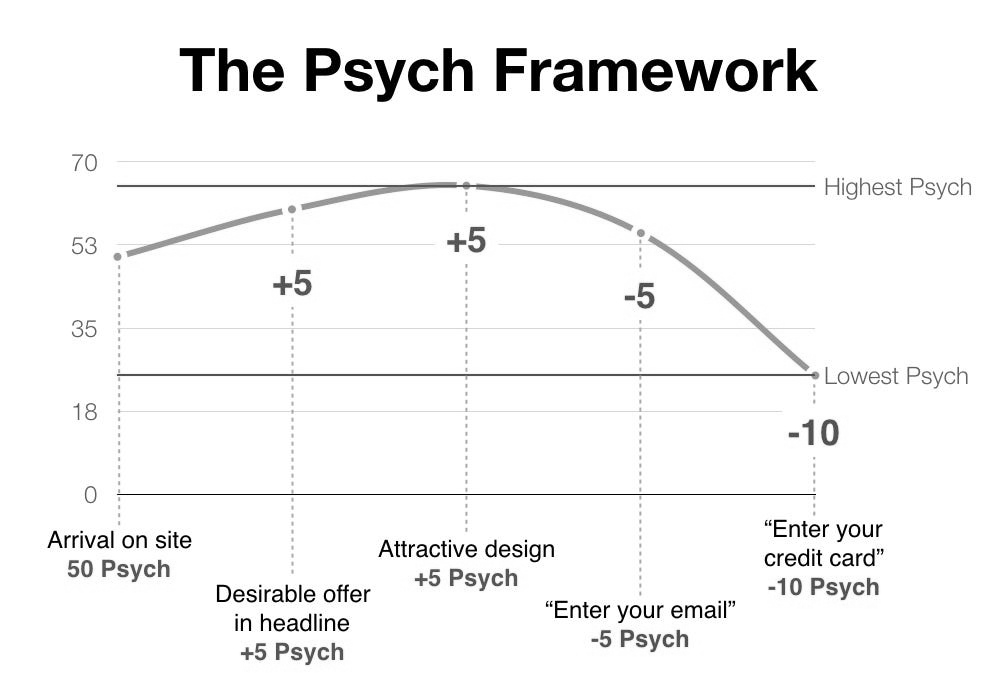
The Psych Framework, developed by Darius Contractor, provides a systematic approach to understanding and optimizing the emotional journey users experience on websites and digital platforms. Rather than viewing conversion funnels purely through technical or logical lenses, this framework recognizes that every user action carries emotional weight that either propels them forward or creates resistance that leads to abandonment.
For marketing and sales professionals focused on lead generation and conversion optimization, understanding emotional dynamics transforms how you approach funnel design, messaging, and user experience. The companies that systematically measure and optimize for emotional experience consistently outperform those focused exclusively on technical optimization.
Understanding the Emotional Experience Model
The Psych Framework operates on a fundamental principle: every interaction users have with your website, application, or marketing materials either increases or decreases their emotional energy level. This energy, measured on a conceptual psychological scale, determines whether users feel motivated to continue toward conversion or discouraged enough to abandon the process.
Emotional Energy as Conversion Fuel
Think of emotional energy as the fuel that propels users through conversion funnels. Users arrive at websites with initial energy levels based on their needs, expectations, and prior context. As they interact with your site, each element they encounter either adds to or depletes this energy reserve.
When emotional energy remains high, users willingly complete forms, provide information, make purchases, and take other desired actions. When energy depletes below critical thresholds, users abandon processes regardless of how close they are to completion. Understanding and managing this emotional trajectory proves essential for maximizing conversion rates.
The Psychology of Digital Interactions
Human psychology does not shut off when people interact with digital interfaces. Users experience genuine emotional responses to design choices, copy, imagery, requests for information, and every other element of digital experiences. These emotional responses accumulate and compound throughout the user journey.
Positive emotions like excitement, hope, confidence, and satisfaction increase willingness to continue. Negative emotions like frustration, confusion, anxiety, and disappointment decrease motivation and increase abandonment likelihood. While this seems obvious when stated explicitly, many conversion optimization efforts ignore emotional dynamics entirely.
How the Psych Framework Works in Practice
The framework becomes tangible through practical application. Consider a job board website where users seek employment opportunities. Mapping their emotional journey through the conversion funnel reveals specific points where energy increases or decreases.
Initial Arrival: High Energy State
When users first arrive at the job board homepage, they typically experience elevated emotional energy. They feel hopeful about finding new career opportunities, excited about potential changes, and motivated to explore available positions. This initial energy might register at a psychological level of 80 out of 100.
This high-energy state represents an opportunity. Users are primed to take action and willing to invest effort toward their goals. However, this energy is also fragile and can quickly deplete if subsequent experiences prove frustrating or discouraging.
Information Collection: Energy Depletion
As users progress through the funnel and encounter requests for personal information, their emotional energy typically declines. Providing names, email addresses, creating passwords, and entering verification codes all feel like work without immediate reward. The psychological energy level might drop to 40 as users complete these tedious but necessary steps.
This decline occurs for several reasons. Users must shift from passive consumption to active participation. They face friction from form fields and input requirements. They may experience anxiety about sharing personal information or concern about spam and privacy. The immediate value they sought when arriving at the site feels further away despite being closer in the actual conversion process.
Strategic Energy Restoration
Recognizing this predictable energy depletion, sophisticated platforms implement strategic interventions to restore emotional energy before users abandon. The job board might showcase inspiring images of successful professionals, highlight the community of supportive coaches available, display testimonials from users who found dream jobs, or preview exciting opportunities awaiting beyond the registration process.
These elements serve no direct functional purpose in the registration process. They do not make forms easier to complete or reduce required information. Instead, they specifically target emotional restoration, reminding users why they started this process and renewing their motivation to complete it.
When executed effectively, these interventions boost psychological energy back above critical thresholds. Users who might have abandoned at 40 find renewed motivation at 60 or 70, sufficient to push through the remaining registration steps and reach conversion.
Elements That Increase Emotional Energy
Understanding which specific elements increase user emotional energy enables deliberate optimization focused on amplification. Several categories of interventions consistently boost psychological engagement.
Addressing User Pain Points
Content and messaging that directly acknowledge user challenges and demonstrate understanding create powerful emotional connections. When users feel understood, they experience validation that increases trust and engagement.
For lead generation platforms, this might mean explicitly recognizing the frustration of manual data entry, the challenge of finding qualified prospects, or the difficulty of keeping contact information current. By acknowledging these pain points authentically before presenting solutions, you create emotional resonance that increases willingness to engage.
Offering Compelling Value
Clear articulation of value, especially when enhanced through discounts, bonuses, or limited-time opportunities, creates excitement that boosts emotional energy. Users who perceive they are receiving exceptional deals or exclusive access experience positive emotions that override friction.
However, this value must feel genuine rather than manipulative. Artificial scarcity or exaggerated claims trigger skepticism that depletes energy instead of building it. Authentic value propositions that users believe and appreciate create sustainable energy increases.
Displaying Trust Signals
Trust badges, security certifications, customer logos, testimonials, and other credibility indicators reduce anxiety and increase confidence. When users feel assured that your company is legitimate, secure, and respected, their psychological energy increases through reduced risk perception.
For B2B lead generation, specific trust signals might include client company logos, case study results, industry certifications, or third-party validation from respected authorities. Each signal that reduces perceived risk slightly increases the emotional energy available for continuing through the funnel.
Utilizing Appealing Visual Design
Aesthetic quality matters emotionally even when it does not affect functionality. Beautiful imagery, professional design, and thoughtful visual hierarchy create positive emotional responses that increase overall psychological energy.
This does not mean designs must be elaborate or expensive. Clean, professional execution of simple designs often outperforms complex but poorly executed alternatives. The goal is avoiding negative reactions to unprofessional appearance while creating subtle positive responses to quality presentation.
Celebrating Progress and Achievements
Progress indicators, completion celebrations, and milestone acknowledgments provide emotional rewards that sustain energy through multi-step processes. When users feel they are making progress and approaching goals, they experience motivation to continue.
Simple elements like progress bars, step indicators showing "3 of 5 completed," or congratulatory messages after completing sections all provide these emotional boosts. They transform what might feel like endless form filling into a structured journey with visible advancement.
Elements That Decrease Emotional Energy
Just as certain elements boost psychological energy, others predictably deplete it. Identifying and minimizing these energy drains proves equally important to maximizing conversion rates.
Tedious Content and Unnecessary Complexity
Long blocks of text, confusing navigation, unclear instructions, and overly complex processes all deplete emotional energy through frustration and cognitive load. Every element of friction represents emotional cost that users must overcome to reach conversion.
Simplification efforts that reduce this friction directly improve conversion by preserving psychological energy. Shorter forms, clearer copy, more intuitive navigation, and streamlined processes all minimize energy depletion.
Premature Payment Requests
Requesting payment information or credit cards before users experience sufficient value creates anxiety and resistance. Users who have not yet experienced your product or service feel substantial risk when asked for payment details, depleting psychological energy through fear of wasting money.
Delaying payment collection until after users experience value improves conversion by allowing emotional energy to build through positive experience rather than depleting immediately through financial anxiety.
Starting Sales Before Delivering Value
Aggressive sales tactics, pop-ups demanding contact information, or promotional messages before users receive any value all deplete psychological energy. Users who came seeking help or information experience frustration when immediately confronted with sales pressure.
The most effective approach provides genuine value upfront, building emotional energy through helpful content before ever requesting anything in return. This aligns with reciprocity principles while also managing psychological energy strategically.
Unexpected Obstacles and Surprises
When users encounter unexpected requirements, hidden fees, or suddenly complicated processes, their emotional energy depletes sharply. These surprises violate expectations and create negative emotional reactions that often trigger immediate abandonment.
Transparency about requirements, costs, and processes prevents these energy-depleting surprises. While full disclosure might seem like it would reduce conversion by revealing potential obstacles, it actually improves results by preventing the sharp energy drops that cause abandonment.
Implementing the Psych Framework Systematically
Understanding the framework conceptually provides little value without systematic implementation. Leading organizations integrate emotional experience analysis into their standard conversion optimization processes.
Mapping Emotional Journeys
The first step involves explicitly mapping the emotional journey users experience through your conversion funnel. Start with users' likely emotional state when arriving at your site. Then trace each step of the funnel, identifying elements that likely increase or decrease psychological energy.
This mapping requires empathy and often benefits from actual user research. Watching users interact with your site while thinking aloud about their experience reveals emotional reactions that designers and marketers might not anticipate.
Identifying Critical Depletion Points
Most funnels have predictable points where emotional energy drops significantly. Form completion, payment information entry, account creation, and other friction points typically deplete energy substantially. Identifying these critical moments enables targeted intervention.
Data analysis showing where users commonly abandon provides objective evidence of emotional depletion points. High abandonment rates at specific funnel steps indicate that psychological energy has dropped below thresholds necessary for continuation.
Designing Strategic Interventions
Once depletion points are identified, design interventions specifically intended to restore emotional energy at those moments. This might include inspirational content, social proof, value reminders, progress celebrations, or other elements that create positive emotional responses.
The key is placing these interventions strategically where they are needed most rather than randomly throughout the experience. Energy restoration right before predicted depletion prevents abandonment more effectively than interventions placed where energy already remains high.
Testing Emotional Impact
Standard A/B testing can measure the impact of emotionally targeted interventions. Compare conversion rates between versions with and without specific energy-building elements. Measure abandonment rates at critical depletion points before and after implementing interventions.
Qualitative feedback through user testing provides additional validation. Users who report feeling encouraged, reassured, or motivated by specific elements confirm that those elements successfully built psychological energy.
Looking for Important Data Points
Data-driven implementation of the Psych Framework requires identifying specific metrics that indicate emotional states and energy levels throughout user journeys.
Time on Page and Hesitation Metrics
How long users spend on specific pages or steps can indicate emotional states. Very short times might suggest immediate rejection or confusion. Very long times often indicate hesitation or uncertainty. Normal progression times suggest confident forward movement.
Analyzing these timing patterns reveals where users experience friction or uncertainty that depletes energy. Unusually long times on specific pages suggest opportunities for intervention.
Scroll Depth and Engagement
How far users scroll on pages and which elements they interact with provides insight into engagement levels and emotional investment. Users who scroll extensively and interact with multiple elements demonstrate higher energy than those who barely engage before leaving.
Tracking these engagement metrics by funnel stage reveals where psychological energy drops. Declining engagement at specific points indicates where interventions might restore momentum.
Form Completion Patterns
Analyzing which form fields cause abandonment and how long users take to complete different fields reveals emotional friction points. Fields where users spend excessive time or frequently abandon indicate psychological resistance worth addressing.
This might lead to removing optional fields, reordering fields to reduce friction, or adding reassurance near problematic fields that create anxiety.
Exit Survey and Feedback Analysis
Direct user feedback about why they abandoned or what nearly caused them to leave provides explicit insight into emotional experiences. Common themes in this feedback highlight the specific elements that most significantly impact psychological energy.
While not all users provide feedback, those who do often identify problems that data alone might not reveal. Their qualitative descriptions of frustration, confusion, or disappointment point directly to energy depletion sources.
Conclusion
The Psych Framework transforms conversion optimization from a purely technical exercise into a comprehensive approach that acknowledges and actively manages the emotional dimensions of user experience. By recognizing that every element either boosts or diminishes psychological energy, marketers can design funnels that maintain momentum toward conversion rather than inadvertently creating abandonment triggers.
For lead generation professionals and sales teams, this framework provides practical guidance for improving conversion rates across all digital touchpoints. Understanding that users arrive with finite emotional energy that depletes through friction and grows through positive experiences enables strategic design choices that maximize the probability of conversion.
The most successful implementations systematically map emotional journeys, identify critical depletion points, design targeted interventions, and continuously measure impact through both quantitative metrics and qualitative feedback. These organizations recognize that removing obstacles matters but amplifying positive emotions matters equally.
Data-driven application of the Psych Framework consistently improves conversion rates by preserving and restoring the psychological energy that fuels user progression through funnels. Companies that master emotional experience optimization outperform competitors focused exclusively on technical optimization, creating sustainable advantages in increasingly competitive digital markets. By attending to the human emotional reality behind every click, form submission, and conversion, they build experiences that feel effortless and rewarding rather than frustrating and depleting.